
🪟 How a House Window’s Energy Efficiency Is Measured (And How Schaumburg Homeowners Can Improve It)

Living in Schaumburg, IL means your windows must handle it all — freezing winters ❄️, hot and humid summers ☀️, and strong seasonal winds 💨. If your windows are outdated or poorly installed, you’ll feel drafts, see condensation, and pay higher energy bills.
Window energy efficiency isn’t guesswork. It’s measured using five specific performance metrics certified by the National Fenestration Rating Council (NFRC).
In this guide, we’ll explain:
✔ The 5 ways window efficiency is measured
✔ How to improve each one
✔ What warm-edge spacers, Low-E glass, and argon gas actually do
✔ What 2026 Energy Star Version 7.0 standards mean for Schaumburg homeowners

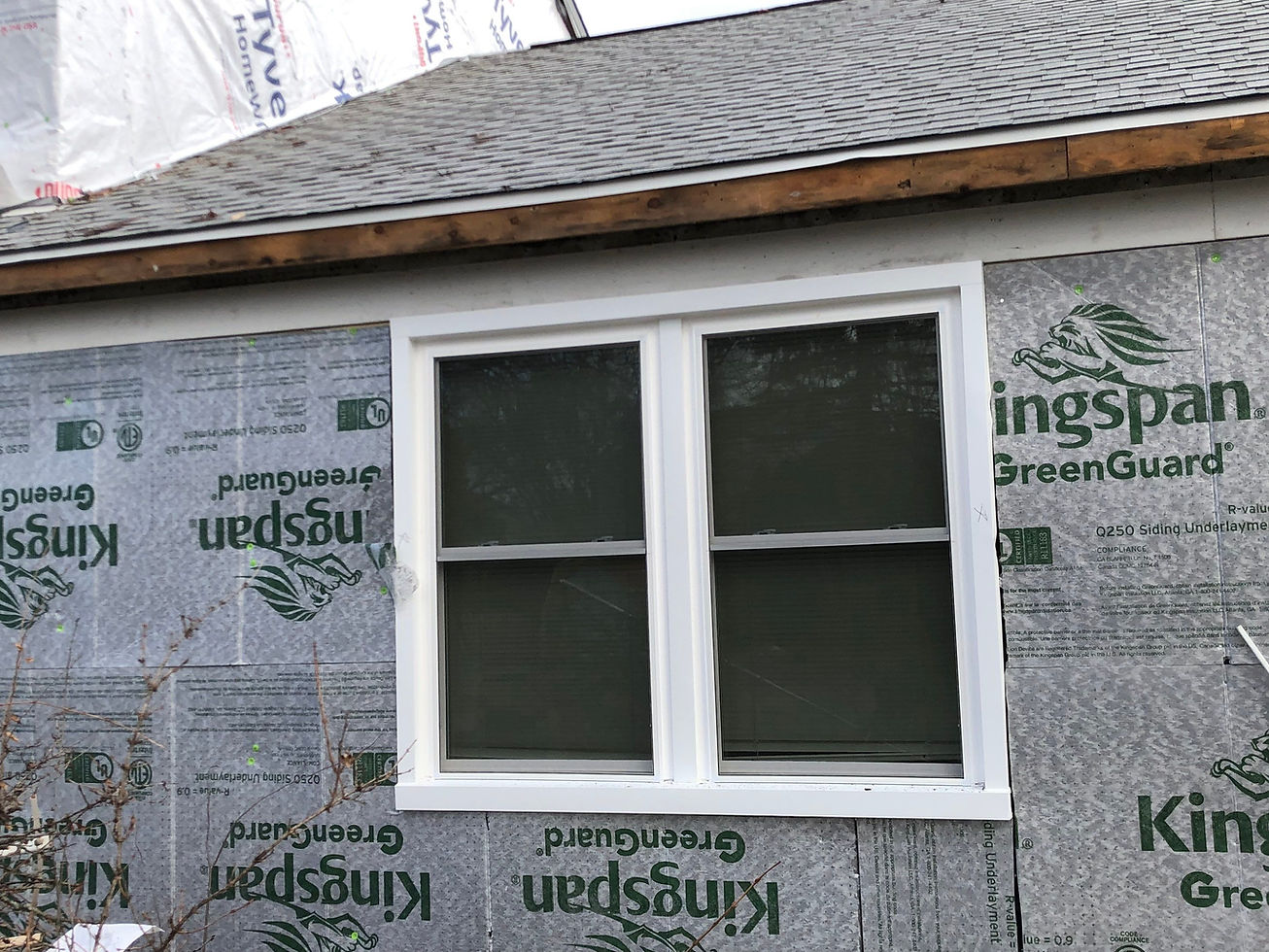
“New vinyl window installation in Schaumburg, IL ✅
Tighter seals, better insulation, and improved energy efficiency — all installed the right way for Midwest weather ❄️☀️.”
🔢 The 5 Ways Window Energy Efficiency Is Measured
1️⃣ U-Factor — How Well the Window Insulates ❄️🔥
U-Factor measures how much heat passes through the window.
Lower numbers mean better insulation.
Old single-pane windows: ❌ ~1.0
Older “efficient” windows: ⚠️ ~0.30
2026 Energy Star Version 7.0 (Northern Zone – Illinois): ✅ ≤ 0.22
📌 A U-factor of 0.22 or lower is now required for Energy Star certification in 2026.
✅ How to Improve U-Factor
✔ Double or triple-pane glass
✔ Soft-coat Low-E glass
✔ Argon or krypton gas fills
✔ Warm-edge spacers
✔ Insulated vinyl or fiberglass frames
✔ Professional installation with full air sealing
💡 Reaching 0.22 almost always requires triple-pane glass or a premium double-pane system.
2️⃣ Solar Heat Gain Coefficient (SHGC) — Managing Sun Heat ☀️
SHGC measures how much solar heat enters your home through the glass.
Scale: 0.00–1.00
Lower number = less heat gain
🔄 2026 Update (Important)
Energy Star Version 7.0 now requires a minimum SHGC of 0.17 for Northern climates like Schaumburg.
Why?
If SHGC is too low, your home loses out on free winter heat, forcing your furnace to work harder.
✅ Ideal SHGC for Schaumburg Homes
🎯 Sweet spot: 0.17 – 0.30
✅ How to Improve SHGC
🪟 Install solar-control Low-E glass
🕶️ Use spectrally selective coatings
🌡️ Upgrade to triple-pane glass
🌳 Add exterior shading where appropriate
3️⃣ Air Leakage — Stopping Drafts 💨
Air leakage measures how much outside air passes through the window assembly.
Industry maximum: ❌ 0.30
High-quality windows: ✅ ≤ 0.10
Premium casement windows: 🏆 0.01–0.05
⚠️ Sliding and double-hung windows usually struggle to get below 0.10 due to their design.
✅ How to Improve Air Leakage
🔒 Multi-point locking systems
🧵 Compression weatherstripping (not brush seals)
🧱 Rigid, well-engineered frames
🛠️ Proper installation:
Low-expansion foam
Correct flashing
Square and level placement
📌 Drafts are one of the first signs of energy loss.
4️⃣ Visible Transmittance (VT) — Balancing Light & Comfort 🌤️
VT measures how much visible light passes through the window.
Higher VT = brighter rooms
Lower VT = reduced glare and solar intensity
Most efficient windows balance:
VT range: 0.40–0.55
✅ How to Adjust VT
🕶️ Tinted or Low-E glass
🪟 Triple-pane glass
🧩 Decorative or frosted glass
🏠 Interior shades or blinds
📌 Lower VT often improves comfort without making rooms feel dark.
5️⃣ Condensation Resistance — Reducing Winter Moisture 💧
Condensation resistance measures how well a window prevents moisture buildup — a major issue during Illinois winters.
Higher ratings mean:
✔ Warmer interior glass
✔ Less condensation
✔ Lower mold risk
⚠️ Some newer labels may refer to Condensation Index (CI) instead of CR — both use a 1–100 scale, and higher is better.
✅ How to Improve Condensation Resistance
🧱 Warm-edge spacers
🪟 Low-E glass
🔒 Reduced air leakage
❄️ Lower U-factor
🌬️ Balanced indoor humidity
🛠️ Professional installation
🧱 What Is a Warm-Edge Spacer (And Which Ones Are Best)?
A spacer separates the panes of glass and seals in insulating gas — and it has a huge impact on condensation and comfort.
❌ Aluminum Spacers
Highly conductive
Cold glass edges
Increased condensation
⚠️ Stainless Steel Spacers
Better than aluminum
Still conduct cold
Moderate performance
🏆 Best Warm-Edge Spacers for Schaumburg Homes
✅ Silicone Foam Spacers (ex: Super Spacer)
Zero metal conductivity
Excellent condensation resistance
Flexes with temperature changes
✅ Hybrid Plastic / Metal Spacers
Very strong
Much warmer than metal spacers
✅ Thermoplastic Spacers (TPS)
Polymer-based
Excellent edge-of-glass warmth
Ideal for custom shapes
📌 Foam spacers are often preferred in Illinois because they don’t conduct cold at all.
🔬 What Is Low-E Glass & How Is It Installed?
Low-E (Low Emissivity) glass has a microscopic metallic coating that reflects heat while allowing visible light to pass through.
How Low-E Improves Efficiency
❄️ Reflects indoor heat back inside during winter
☀️ Blocks excess solar heat in summer
🌡️ Improves U-factor and SHGC
How Low-E Is Installed
✔ Factory-applied during manufacturing
✔ Not a film added later
✔ Sealed inside the insulated glass unit (IGU)
Most modern high-performance windows use soft-coat Low-E, which provides the highest efficiency.
🌬️ What Is Argon Gas (And Why It’s Used in Windows)?
Modern energy-efficient windows don’t just rely on glass — they use inert gas fills between the panes to improve insulation.
🔬 What Is Argon Gas?
Argon is a colorless, odorless, non-toxic gas that:
Is heavier than air
Moves heat more slowly
Reduces convection inside the glass unit
💡 Slower heat movement = better insulation.
🧪 Other Gas Types Used in Windows
⚪ Air (Old Standard)
Cheap
Poor insulation
Used in older windows
🟣 Argon (Most Common)
Excellent insulation
Affordable
Industry standard for double-pane windows
🔵 Krypton (High-Performance)
Denser than argon
Better for narrow spaces and triple-pane glass
More expensive
🟡 Xenon (Rare)
Extremely dense
Very high performance
Rarely used due to cost
❄️ Why Gas Is a Better Insulator Than Air
Gas improves window efficiency by:
✔ Reducing heat transfer
✔ Slowing convection currents
✔ Improving U-factor
✔ Increasing condensation resistance
📌 Argon gas directly improves U-factor, condensation resistance, and overall comfort.
🔬 How Gas Is Installed
✔ Sealed between panes at the factory
✔ Locked in by spacers and edge seals
✔ Verified as part of NFRC whole-window testing
⚠️ Gas cannot be added later — it must be part of the original window design.
🏠 Energy-Efficient Windows for Schaumburg Homes
At Cornerstone Restoration, we help homeowners choose window systems designed for Midwest weather, not one-size-fits-all solutions.
👉 Learn more about our window replacement services here:
We proudly serve:
📍 Schaumburg, IL
📍 Rockford
📍 McHenry
📍 Naperville
📍 Joliet
📍 Barrington & surrounding suburbs


Comments